.jpg)
Common Mistakes to Avoid When Choosing a Simple Wedding Dress
- Jullia Bridal

- Feb 20
- 4 min read
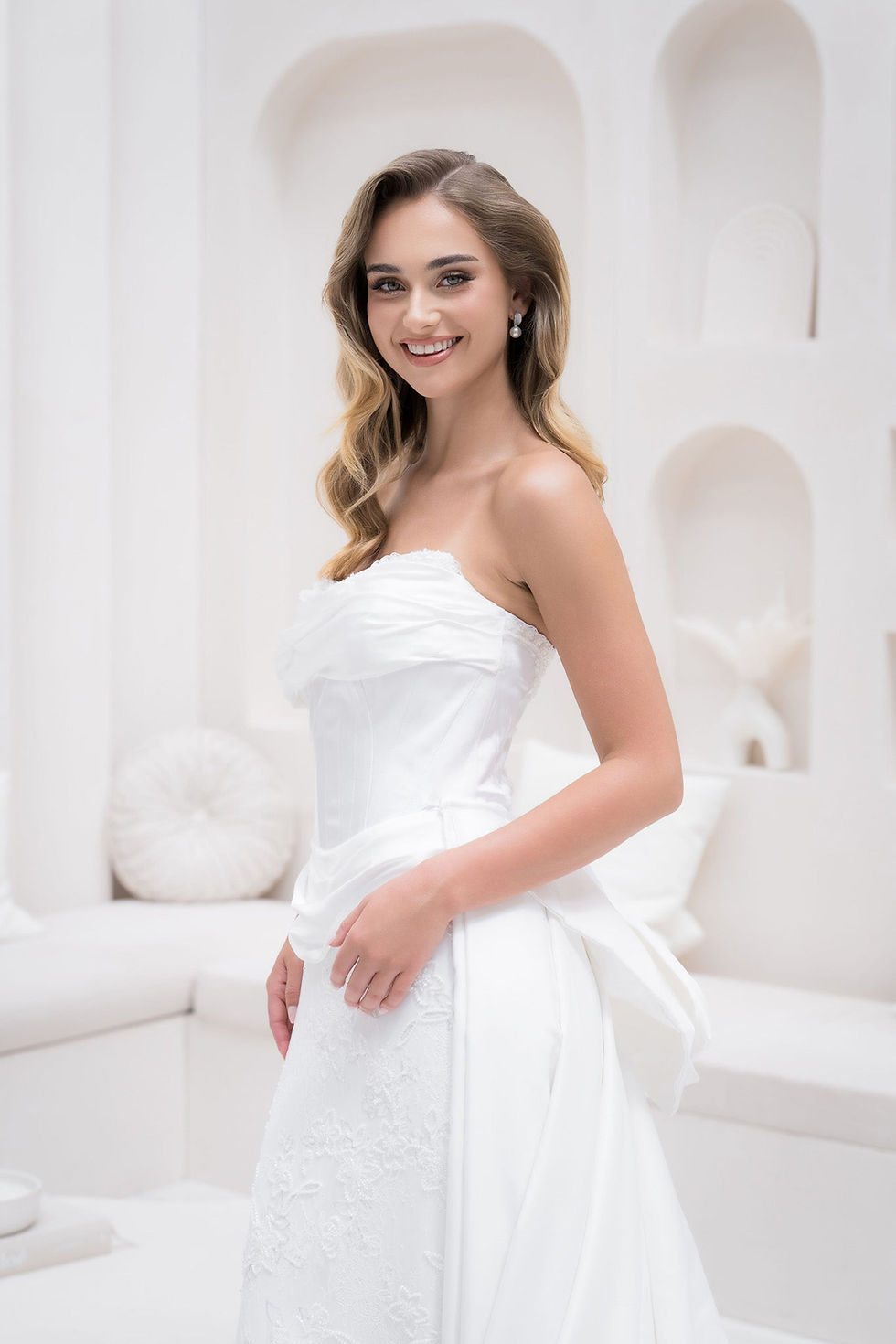
There is something undeniably timeless about clean lines and understated design. Many brides are drawn to simple elegant wedding dresses because they feel refined, modern, and effortlessly beautiful. However, choosing a minimal gown requires just as much thought as selecting a heavily detailed one. In fact, simplicity can highlight both the strengths and flaws of a dress more clearly. Understanding common mistakes can help brides make confident decisions and enjoy a smoother, more meaningful shopping experience.

Overlooking the Importance of Fit
One of the biggest mistakes brides make with a simple gown is underestimating the power of tailoring. Without heavy lace, beading, or embellishment to distract the eye, fit becomes the main focus. If a dress pulls, gaps, or sits unevenly, it is far more noticeable.
A well-tailored gown should follow the natural lines of the body without feeling restrictive. Proper alterations refine sleeve length, waist placement, and hemline. We always encourage brides to see tailoring as part of the journey, not an optional extra. The right fit transforms a minimal design into something truly elegant.
Choosing the Wrong Fabric
Fabric plays a central role in the success of a simple wedding dress. Since the design is understated, the material must carry the visual impact. Thin or low-quality fabrics can appear flat or cling in ways that feel uncomfortable.
High-quality crepe, silk, satin, or structured mikado offer smooth drape and subtle dimension. They also tend to photograph better and hold their shape throughout the day. Brides often notice that premium fabrics feel different on the skin, offering both comfort and structure.
Investing in quality materials ensures the dress looks polished from every angle.
Ignoring Comfort and Movement
A wedding day involves far more than standing at the altar. Brides will walk, sit, hug guests, and dance. Choosing a dress that looks beautiful but feels restrictive can affect the entire experience.
Comfort is especially important with minimalist gowns. Without layers of embellishment, every seam and lining detail matters. Breathable fabrics, supportive construction, and secure closures allow brides to move naturally. A gown should feel like it belongs to the bride, not something she must constantly adjust.
Over-Accessorising
Another common mistake is trying to compensate for simplicity with too many accessories. While a simple gown provides a beautiful canvas, piling on bold jewelry, dramatic veils, or heavy belts can overwhelm the look.
The beauty of minimal design lies in balance. A delicate veil, classic earrings, or a clean hairstyle often complements the gown better than multiple statement pieces. The goal is harmony rather than distraction.
When styled thoughtfully, simple elegant wedding dresses speak for themselves without needing excessive additions.
Not Considering Venue and Setting
Even a minimal gown should reflect the wedding environment. A structured satin dress may suit a formal ballroom, while a lighter crepe design may feel more natural in a garden or beach setting.
Brides sometimes choose a dress based solely on trend without thinking about how it fits the overall atmosphere. Considering venue, season, and personal comfort ensures the gown feels appropriate and cohesive.
Versatility is one of the strengths of simple designs. With thoughtful selection, the same gown can feel classic in a church ceremony or modern in a contemporary venue.
Rushing the Decision
Minimalist dresses can appear similar at first glance, which sometimes leads brides to rush their choice. However, small differences in neckline, waistline, or fabric weight make a significant impact.
Taking time to compare options, move in the gown, and view it in different lighting helps avoid regret later. A supportive boutique experience can make this process calmer and more informed. We believe that listening carefully to each bride’s vision helps narrow down choices with clarity rather than pressure.
Forgetting Long-Term Value
While trends change, simple silhouettes often stand the test of time. Brides sometimes underestimate the lasting appeal of understated design, worrying it may look too plain. In reality, clean lines age beautifully in photographs.
Choosing quality over trend-driven details also supports long-term value. A well-made gown can be preserved, repurposed, or kept as a meaningful keepsake. Thoughtful decision-making today ensures the dress remains special for years to come.
Sustainability and Mindful Choices
Many modern brides are thinking more carefully about consumption. Minimal gowns often align with a more responsible approach to fashion. Fewer embellishments can mean less material waste, and investing in one high-quality garment reduces the likelihood of multiple purchases.
Sustainability does not mean sacrificing beauty. It means choosing intentionally. When brides select a gown that reflects their style and values, the result feels more meaningful.
Meeting Modern Expectations
Today’s brides expect transparency, comfort, and authenticity. They want a dress that feels true to who they are. Minimalist bridal fashion reflects this shift. Rather than focusing on excess, it celebrates individuality and confidence.
Avoiding common mistakes helps brides appreciate the full value of simplicity. A thoughtful approach ensures that the dress supports both emotional and practical needs.
Conclusion
Choosing among simple elegant wedding dresses requires attention to detail, from fabric and fit to styling and long-term value. By avoiding common mistakes, brides can embrace minimalism with confidence and ease. At Jullia Bridal, we are committed to guiding each bride toward a gown that feels refined, comfortable, and truly personal. When simplicity is chosen thoughtfully, it becomes the most powerful statement of all.


Comments